Separate lid, wall and base decisions
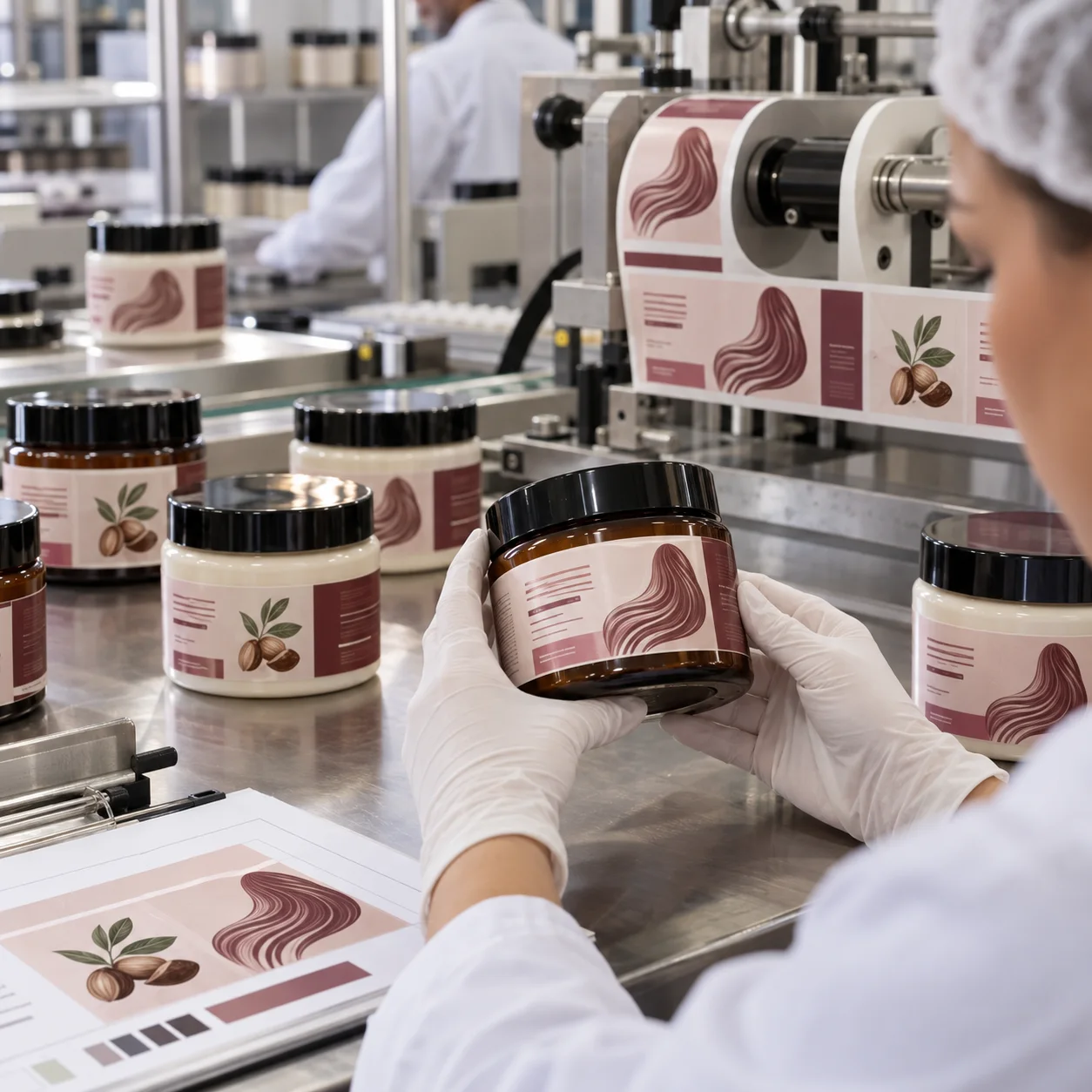
A short wide jar offers three different surfaces: lid, curved sidewall and base. Treat them separately. A lid label can act as a shelf signal; the sidewall can carry product identification; the base can hold supporting details if the responsible team needs that space.
Start with the usable curve
Measure the sidewall height and circumference on the filled jar, then allow a sensible gap or overlap. The entire circumference is not always a practical wrap panel: a seam, rib or label edge near a dominant illustration can make a good design look accidental.
Make treatment variants easy to read
A flowing hair icon, seed motif or controlled color block can separate repair, moisture and curl-care variants without copying a competitor. Keep the core grid stable so the collection reads as a family before buyers begin to compare individual jars.
Choose finish around real use
Hair masks are typically opened with wet hands and kept in humid spaces. Film labels are commonly considered where moisture and scuffing matter. Matte finishes can soften glare; gloss can strengthen color. The best choice depends on jar material, use, storage and the artwork itself.
Reserve the information panel early
Directions, ingredient information and market-specific required content should be confirmed by the responsible team. Put that material in a planned panel instead of adding it after the front art is already full. A clean front needs a disciplined back.
Proof each jar size in the range
Share jar samples or dimensions, artwork, variant count, finish and quantity. A label system that works on a 250 ml jar may need a different hierarchy on a travel size. For general jar planning, see our cosmetic jar label guide.
Need hair mask jar labels?
Send jar dimensions, artwork and quantity for a practical label recommendation and free digital proof.
Request a Hair Mask Label Quote