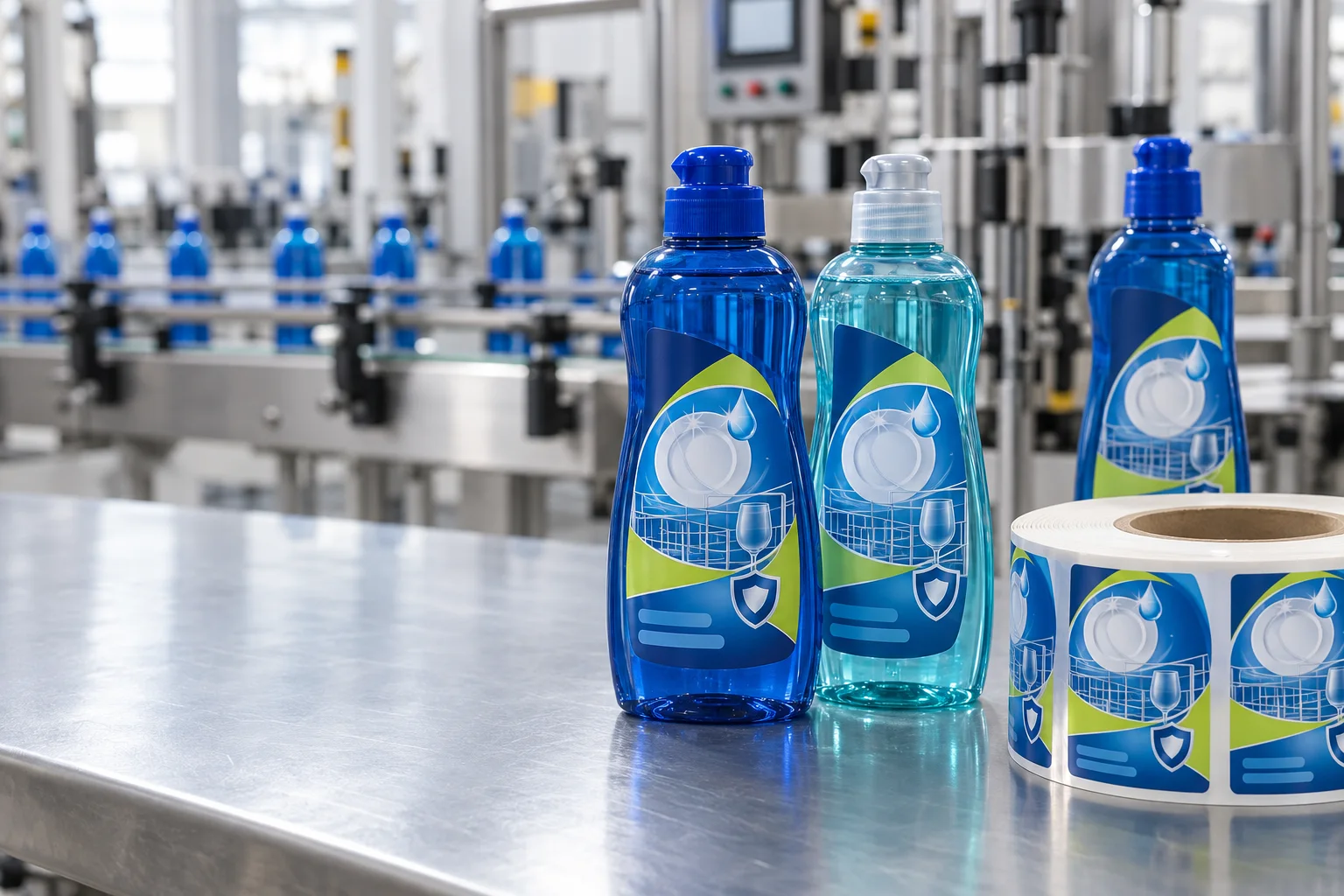
Measure the dosing bottle, not a flat sketch
Record the curved wall, cap clearance, shoulder shape and any narrow grip zone from a filled sample. Small bottles make every millimetre visible, especially where a wrap label approaches a cap or a sharp curve.
Use category graphics for quick recognition
A sparkling plate, water droplet, rack grid or shield mark can build an original visual vocabulary for the product. Pair the icons with a disciplined colour system; the aim is immediate recognition, not an imitation of a familiar shelf design.
Protect readability on a small panel
Keep the front focused on product family and key cue, then reserve the remaining space for final information supplied or approved by the responsible team. A tiny bottle cannot carry a full page of copy without becoming difficult to use.
Specify waterproof construction
Rinse aid packs encounter splashes, product residue and cabinet handling. Waterproof films and protective finishes can be evaluated, but the final label construction should follow the bottle resin, product formula, storage conditions and application process.
Confirm the roll for the applicator
Set label gap, unwind direction and placement before production. It is easy to treat these as print-house details; they are actually line decisions that determine whether the bottle receives the label consistently.
Review it beside related dishwasher products
Check whether the bottle reads as its own product when placed beside tablets, powder or cleaner packs. Supply bottle dimensions, artwork, finish preference and quantity. For a related pack, see our dishwasher tablet label guide.
Need dishwasher rinse aid labels?
Share your bottle details, artwork and quantity for practical label options and a free digital proof.
Request a Rinse Aid Label Quote