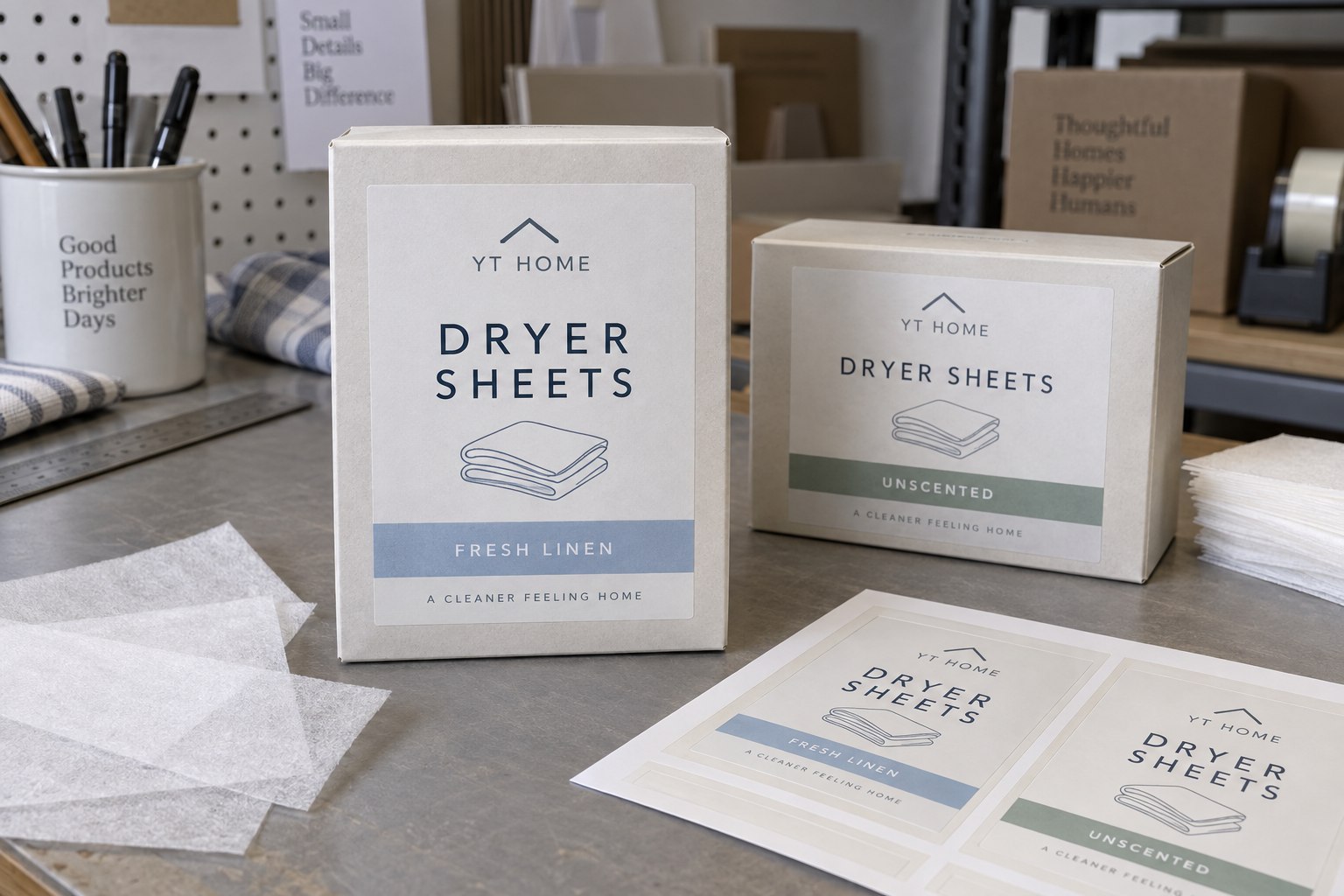
Use the erected carton, not a flat artwork file
Fold and close the actual carton. Mark the front panel, top opening, side seam and any tuck flap. Keep a separate adhesive label entirely within a flat panel; crossing a fold can distort text and create an exposed edge. If the carton changes between trial and bulk production, measure again before reusing the same die.
For a paperboard box, the visible label edge is part of the design. A matte paper label may sit quietly on an uncoated carton; a film label may create a different contrast and hand feel. Those are appearance choices, not proof of adhesion. The board coating and surface texture must be tested with the proposed adhesive.
Give each scent a controlled visual cue
The illustrated cartons use a stable brand, large “Dryer Sheets” name, folded-fabric line icon and separate colour bands for Fresh Linen and Unscented. The icon identifies the format. It does not prove fabric care, reduced static or any environmental benefit. If the product has claims, the responsible team must supply approved language and evidence.
I would place both variants side by side under normal packing light. If staff can identify the correct carton from the front and from the top of a short stack, the artwork is doing useful work. If one colour is the only difference and the shades are similar, add a clear text identifier. Avoid tiny scent type tucked beneath a decorative photograph.
Plan the copy as a production component
Agree what information belongs on the front, side and back before setting label dimensions. Directions, content counts, warnings and market-specific text are brand-owner decisions; do not invent them to make a mockup look complete. A common printed carton plus variable applied front labels can help a small range change variants, but compare its application labour with separate directly printed cartons.
If a retail barcode is needed, ask for assigned data and a verified print area rather than adding a plausible-looking placeholder. GS1's barcode guide notes that folds and flaps can obscure symbols. Its advice is a placement check, not a substitute for the retailer's own requirements.
What I would put in the supplier email
Send one erected carton, board specification if available, panel measurements, approved text, artwork count, quantity per variant and who applies the labels. Request a digital proof and a physical sample on the real board. Inspect edge appearance, alignment after folding and scuffing during ordinary carton handling. If a test condition matters, write it down so supplier and buyer judge the same sample.
Avery Dennison's home-and-personal-care materials overview is a useful starting point for discussing paper and film constructions, not a pass certificate for this carton. Our label buying guide helps assemble the remaining quotation details. The label should make the right box easy to pick even when no designer is standing next to it.
Related label guides
Browse all packaging guides · Prepare a complete label specification
Plan your label project
Share your packaging dimensions, artwork versions, quantity per design and intended use. We can review label options and prepare a digital proof; physical performance and production terms need project-specific confirmation.
Request a Wash Care Labels Quote