A cosmetic label's finished outline is only part of the converting drawing. The waste around and between repeated labels must also be handled by the proposed production route. Before purchasing a new cutting tool, ask the converter to review the complete layout with the actual construction, rather than approving an isolated attractive shape.
This is a planning decision before tooling. It differs from investigating a supplied roll whose backing has already broken. A designer and buyer can identify constraints, compare layout proposals and record the accepted shape without prescribing press settings.
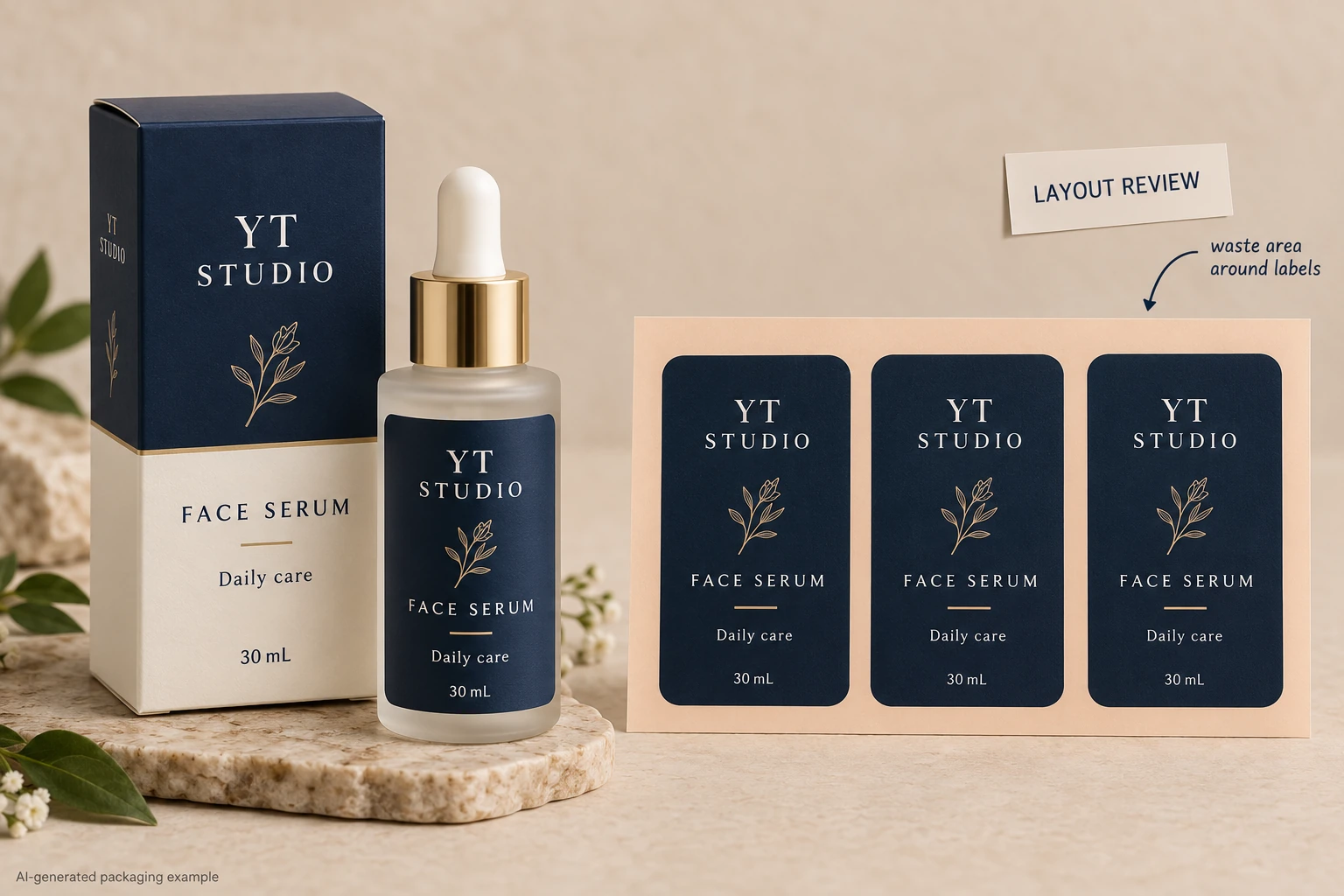
Ask to see the waste as well as the labels
Request the proposed repeat layout, with the finished labels, gaps, outer waste and any internal cut-outs identifiable. Include the machine direction and the converter's layout reference. A single outline placed in an email does not show what exists between neighboring repeats.
Mark visually narrow waste sections, sharp changes in the outline and small internal waste areas as review questions. Let the converter explain which features matter to its construction and process. This article offers no universal minimum bridge width or corner radius; a dimension copied from another stock may answer a different production problem.
Keep the scope honest. The drawing review identifies questions and alternatives. It does not prove that a layout will strip successfully or authorize an operator to change tension, die pressure or other equipment settings.
Material choice can change the tooling conversation
Avery Dennison's Hammerlock and TL2 converting bulletin, dated 2014, warns against die cutting and matrix stripping those particular aggressive adhesive constructions. That is a product-specific warning, not a general diagnosis of cosmetic labels. It illustrates why a shape review cannot replace checking the chosen material's supported converting route.
Ask the proposing supplier to identify the face, adhesive, liner and finish covered by its recommendation. If its favorable layout history concerns another construction, ask what can reasonably carry forward and what needs further evidence. Do not change the adhesive solely to preserve a shape without returning to the pack's adhesion requirement.
The material owner and tooling owner should review the same reference. If one is quoting a shape revision while the other is quoting an older footprint, the buyer has two incomplete proposals rather than one approved plan.
Preserve what the bottle actually needs
List the finished-pack constraints before accepting a more convenient layout. Which dimensions control fit? Which edge defines the brand presentation? Which content areas cannot shrink or move? Identify those constraints on the intended container and approved artwork.
Then ask the converter to show the actual alternative, not merely say it has improved the shape. A corner change, revised spacing or different repeat arrangement can have different consequences. The buyer needs to know whether the finished label changes, only the production layout changes or both change.
If an alternative changes the outline, recheck its fit and artwork relationships. If it changes only the repeat layout, have the receiving operation confirm any relevant supply implications. A better-looking yield calculation is not sufficient approval of either route.
Compare proposals with a geometry decision sheet
This editorial sheet connects the finished pack to the converting layout. It does not prescribe a production setup.
| Reference | Record | Decision owner |
|---|---|---|
| Finished label | Required shape, dimensions and container fit | Brand and packaging owner |
| Complete layout | Repeat, direction, gaps and identified waste areas | Converter and tooling owner |
| Construction | Named face, adhesive, liner and finish | Material and converting parties |
| Proposed change | Marked before/after drawing and reason | Designer, converter and buyer |
| Evidence | Relevant sample, trial or supported production basis | Competent technical party |
| Purchase release | Accepted drawing revision and remaining conditions | Buyer with named approvals |
Start with the finished requirements and current drawing. Ask the converter to mark concerns on its complete layout. Obtain an alternative and identify exactly what changes. Compare both routes against fit, content, supported construction, relevant evidence and quotation scope. Record the selected revision before ordering the tool.
If the technical team says a representative conversion trial is needed, have it define the sample and acceptance arrangement. Record that trial's actual construction and limits. A paper office print of repeated outlines can help discussion but cannot demonstrate matrix removal.
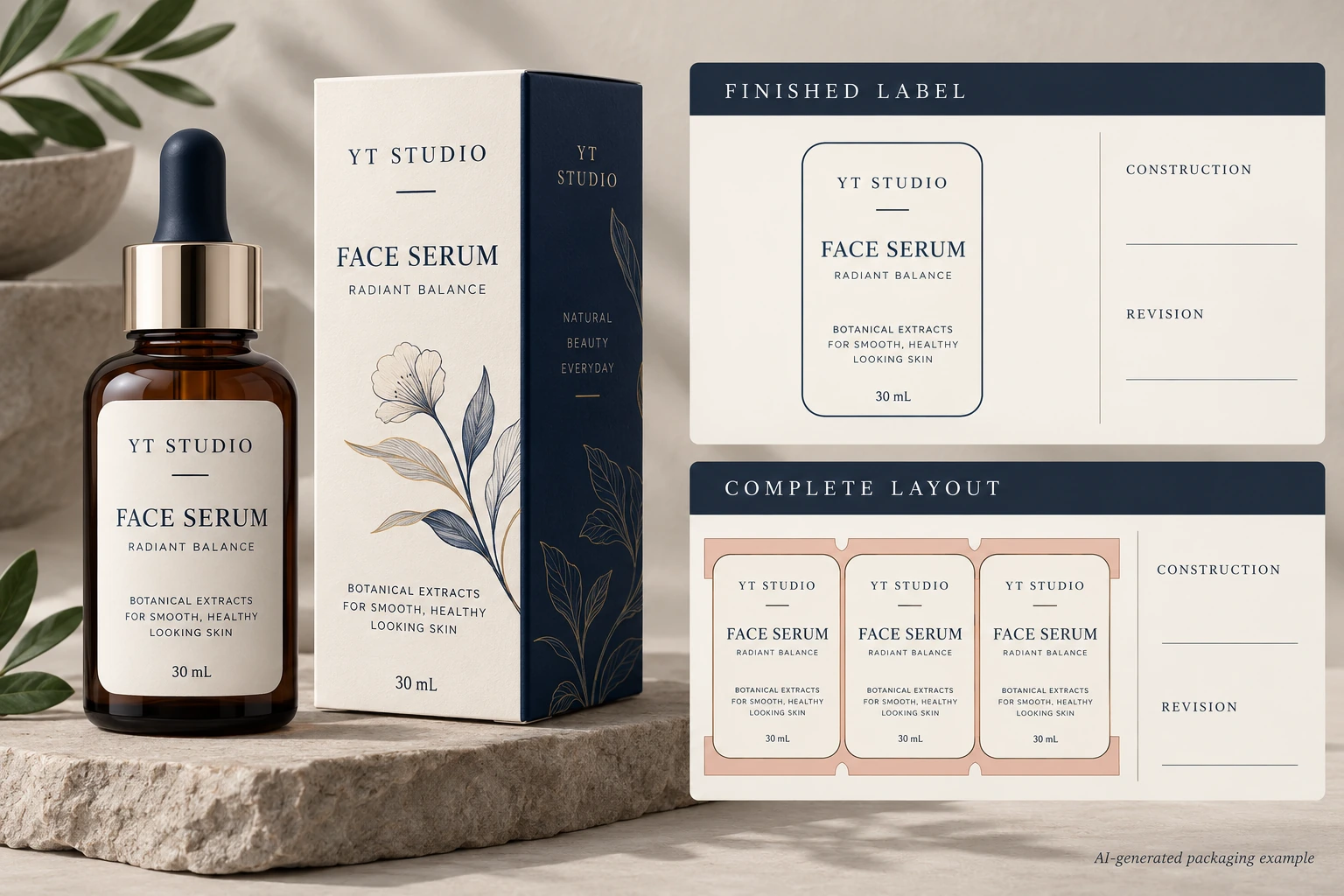
A shape change and a layout change are different purchases
Consider a hypothetical brand where the bottle footprint is already fixed but the converter proposes a revised repeat arrangement. The buyer can compare the supported quotation and supply implications while preserving the approved finished outline.
In another project, a decorative inward notch creates an unresolved converting question. If that notch is optional, a brand-approved outline revision may be proportionate. If it is central to the design, the team may prefer to investigate another supported process or construction. Neither conclusion follows simply from the label being small or premium.
Keep these options visible in the quote. Do not approve a new tool while expecting the designer to resolve an undocumented shape change later. That leaves the expensive physical instruction ahead of the decision it is supposed to implement.
Stop before a drawing ambiguity becomes hardware
Hold the tooling release if the accepted construction is missing, the production layout has not been identified or the finished outline differs between parties. Ask for the corrected linked references. The purpose is to close a specific purchase decision, not to require a redesign of every familiar label.
If the concern instead arises from a finished roll with a break event, use the liner web-break evidence guide. If the issue is the cut through the label and backing, use the kiss-cut review. Those investigations should not be replaced by an unsupported retrospective claim that the original shape caused the fault.
For a cosmetic label quotation, provide the container, finished outline, dimensions, artwork, construction preference and quantity per design. Ask for the complete converting-layout review and identify which pack features must remain. The form prepares a message; send drawings separately by email or WhatsApp. Tie the tool purchase to an accepted revision.